How Vanadium redox flow battery Work?
2022-04-28
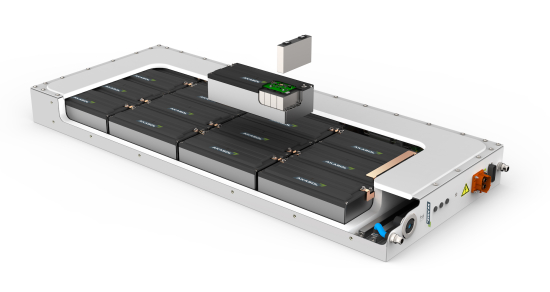
Vanadium battery, also known as Vanadium redox flow battery (VRFB), is mainly divided into two parts: stack and electrolyte. Stack is a place where electric energy and chemical energy are converted to each other; The electrolyte stores electric energy and circulates during operation. It does not produce harmful substances in the process of use. It is a new type of green battery. Vanadium battery has special structure and incomparable advantages over traditional battery.
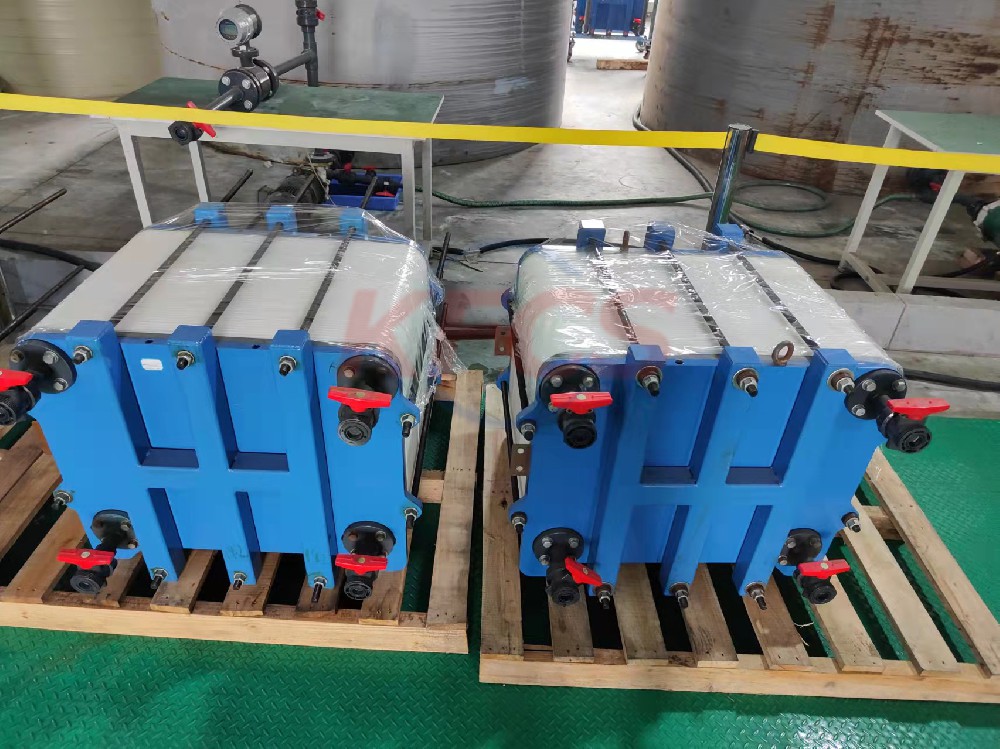
During the discharge cycle, V2+ is oxidized to V3+ in the negative half-cell and an electron is released to do work in the external circuit (either DC or, for AC systems, through an AC/DC converter).
In the positive half-cell, V5+ in the form of VO2+ accepts an electron from the external circuit and is reduced to V4+ in the form of VO2+. Hydrogen (H+) ions are exchanged between the two half-cells to maintain charge neutrality. The hydrogen ions diffuse through the anion or cation-ion permeable polymer membrane that separates the half cells. Charged vanadium species and water can also diffuse across the membrane. The cross-diffusion results in direct energy loss for that cycle. However, when vanadium is the only element present on both sides of the cell, this cross diffusion mechanism does not result in permanent capacity loss, as long as the total vanadium in the system remains constant (i.e., there is no loss due to precipitation).
About News
- How Vanadium Flow Redox Batteries Work?
- World's largest lithium-vanadium hybrid energy storage system starts up at Oxford Energy Centre
- New Vanadium Redox Battery may be developed
- Types of Recycling Lithium-Ion Batteries
- The global all-vanadium flow battery market will reach a scale of 100 billion in 2023
- The Smart Battery Management System
- Characteristics Of Vanadium Redox Battery Energy Storage Technology
- Power battery recycling will help alleviate the demand for metal resources
- About $5 billion! Quantum plans to invest and build more than 3.5gW solar Park in Lionel Island, Indonesia
- VFB-1KW all-vanadium flow energy storage system
Products